Wealth by Design: Architecture Trends That Add Long-Term Value
Architecture and the real estate market go hand in hand. After all, without architecture, there’s no real estate! But even with this in mind, the financial aspect of property and the structural design of homes are often kept separate. In this article, we’re going to look at how modern architectural design can be used to increase the value of homes and property portfolios.
Introduction
The property market was once all about aesthetics. Buyers and investors were concerned with the size of a property, its surrounding areas, how many rooms were inside and so on. But because of this outlook, real estate wasn’t optimised for sustainability and performance. Fast forward to today and we have a much more sustainability-minded population that cares about the planet.
For real estate, that means there has been a shift from aesthetics to performance. Property that is eco friendly is far more desirable and subsequently more valuable. Here are four architectural trends that sustainable homeowners and on-the-ball investors should be aware of.
Floating Homes
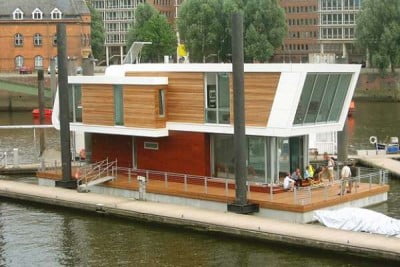
Houses built on water are referred to as floating homes. Unlike houseboats, floating homes are permanent and fixed to a specific location where they can be connected to the required utilities. The key benefits span across sustainability, safety and luxury.
For a start, floating homes can rise with the tide which makes them a popular option in areas that are commonly impacted by floods. Cities like Amsterdam in the Netherlands where there is a large number of canals have a large population of floating homes for safety reasons. It’s also really easy to integrate floating homes with energy efficient processes around waste water and water harvesting.
Those seeking more luxurious living standards may be drawn to the secluded nature of floating homes. In more glamorous locations, floating homes offer scenic views and secluded living that appeals to high net worth individuals and celebrities. California, Miami and Dubai are popular locations for luxurious floating homes while floating homes designed to combat floods are popular in areas like Southeast Asia.
Smart Homes
Smart homes are where real estate and technology intersect. While smart homes come in many different shapes, most smart homes connect a property’s appliances with the homeowners tech devices. High tech areas like China and Singapore lead the way in terms of the popularity of smart homes, while wealthier western cities are also seeing a rise in the number of smart homes.
The rising popularity of smart homes is driven by a few factors. First, they help homes to run more efficiently, with homeowners able to turn devices and appliances on and off even when out of the home. Subsequently, this can lower the long term cost of running a home which is another reason why smart homes are becoming increasingly popular.
It’s also important to consider that we have quickly become a tech-led society, and more of us are bringing this into our homes to make everyday tasks simpler.
Co-Living Spaces
Urban cities have become extremely expensive, and in places like London and New York City, most locals turn to the rental market due to the high value of property. Apartments, flats and studios have long been popular in major cities, but are even more so now given the cost of larger real estate.
The standard of these buildings has risen with demand, and we’re now seeing the creation of attractive co-living spaces with shared living spaces and amenities. While this architecture trend may have been driven by the housing market, shared spaces often result in smaller carbon footprints per person meaning that this market appeals to everyone from investors to eco-conscious nomads.
Final Thoughts
In short, real estate that is good for the environment is in high demand and, as a result, the types of homes mentioned above are rising in value. However, there are also a number of other factors that influence the value of a property, such as location, condition and age. If you’re an investor or homeowner who wants a better understanding of your property’s value, you could always use a RICS desktop valuation for both fast and accurate valuations.
Explore Modern Homes:
Commercial Real Estate Trends of 2022 by Granite February 22, 2022 In 2021, every sector was affected by covid-19, including commercial real estate. The government suggested that many people work from home if they could. This had a massive effect on…
Living Underground – A Brief Look by Granite October 8, 2014 The concept of living underground is rather foreign to most. However, it is also something that can really be interesting for anyone to consider. There are many good reasons why…
Picture Quotes - When Words Become Unclear by Granite August 11, 2013 10+ Meaningful Picture Quotes Buildings, too, are children of Earth and Sun. Frank Lloyd Wright There was going to be no more poverty, no more ignorance, no more disease. Art…
How Architectural Designs Promote Health and Happiness by Granite August 15, 2024 Architectural designs can enhance health and happiness if executed correctly. This is very important as increased happiness could have many benefits, such as improved productivity, better learning and a higher…
We invite you to explore modern homes¸ architecture and lifestyle. Discover interior & exterior design ideas, home decor and going green. Get inspired by Granite History!
Disclosure: This website, Granite History, is a participant in the Amazon Services LLC Associates Program, an affiliate advertising program designed to provide a means for sites to earn advertising fees by advertising and linking to Amazon.com.
We earn commissions from some of the products we review or mention on this site.
Amazon and the Amazon logo are trademarks of Amazon.com, Inc. or one of its affiliates.
We use cookies to ensure that we give you the best experience on our website. If you continue to use this site we will assume that you are happy with it.